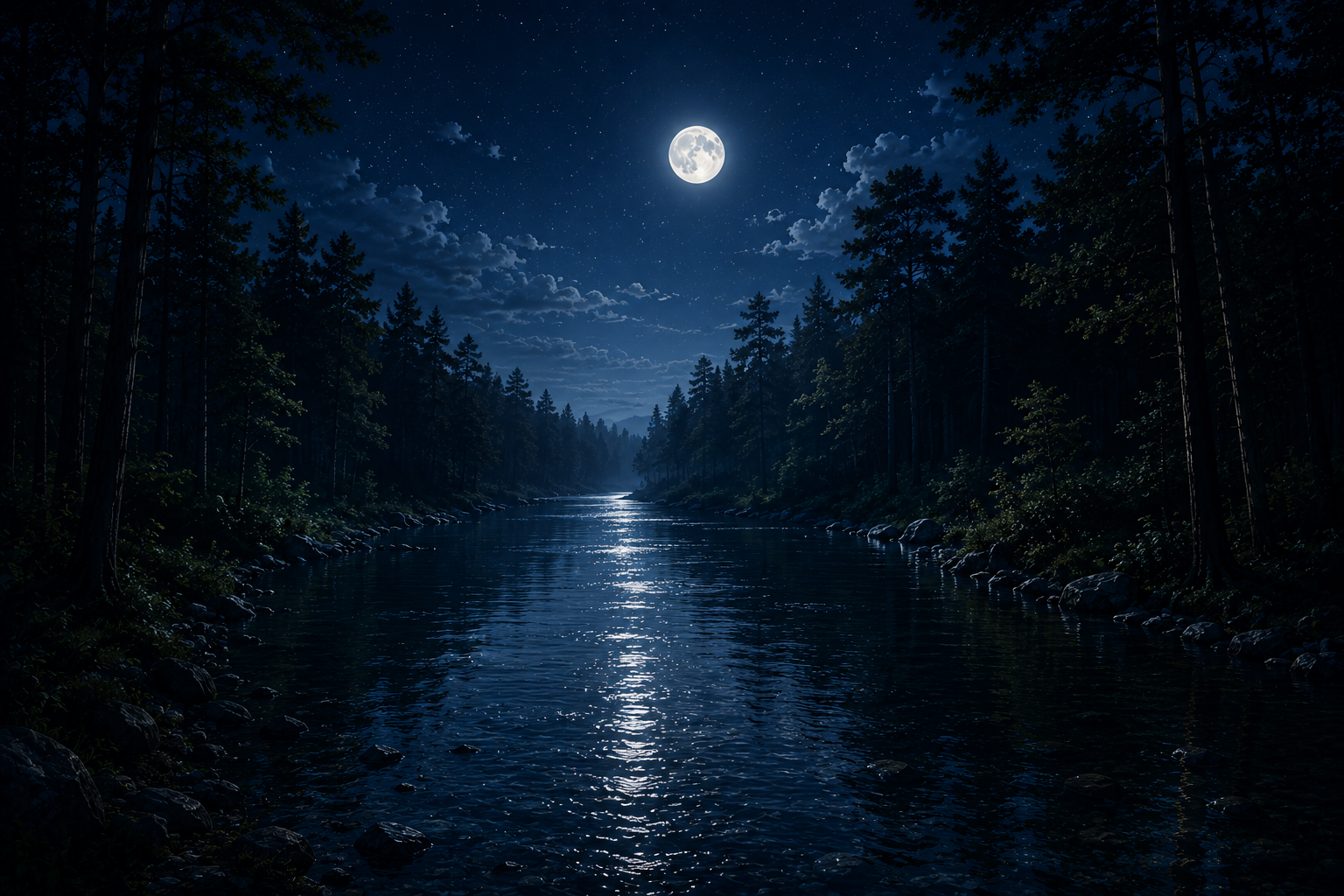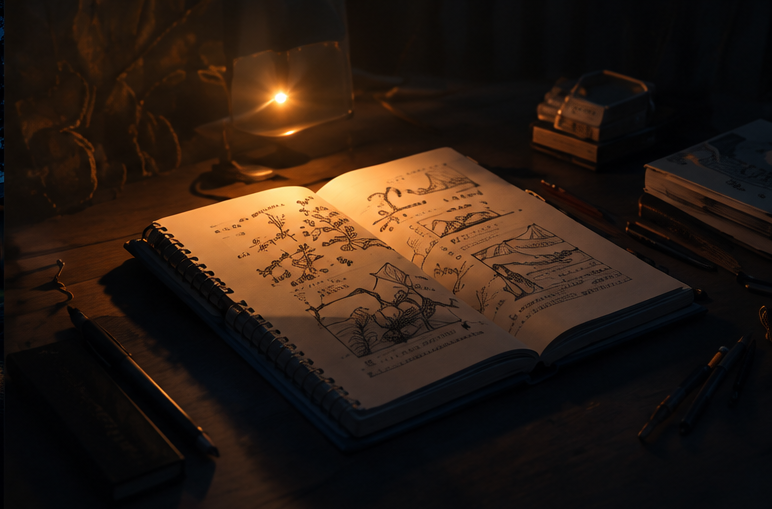
I put the materials library out in the open, but not because I want to make a download site.
It is more like a small display cabinet inside ByteForge Studio.
The images, covers, illustrations, and visual materials used by the site should not all be hidden behind the code. They also should not be pulled into articles everywhere until they disturb the reading.
An article should still let people read the words.
Images can appear, but every section should not feel like it is fighting for attention.
So I would rather place these materials together in the materials library.
People who want to look can look.
People who want a reference can use it as reference.
People who want to know what images this site used, where they came from, and whether they can be quoted can also find some explanation here.
Not a Free Gallery
The materials library is not a free gallery.
This needs to be said first.
I am not against people taking many of these things. Many AI-generated images, self-made images, site covers, and visual materials can be opened for reference, use, and even secondary creation.
But openness does not mean there are no boundaries.
I do not like seeing these materials taken for marketing-account content.
I also do not like commercial use with no credit at all.
And I dislike bulk scraping or bulk downloading even more, treating this place as something to drain for traffic.
That is not “using materials.”
That is treating a personal website as a tool pool.
The materials library can be open, but it should not become a CDN traffic pool, and it should not become a bulk-download resource site for anyone.
This is a bottom line.
AI-Generated Images
AI-generated images can be used.
They can be referenced, remixed, or used as inspiration.
But do not say that you generated them yourself.
Do not pretend they are your original work.
If you use them, at least write a source somewhere.
In Chinese, you can write:
来自位矩。
In English, you can write:
by ByteForge Studio
or:
from ByteForge Studio
It does not need to be complicated.
Even if it is placed at the end of a page, in a note, or in a source line, that is fine.
The point is not ceremony. The point is basic respect.
Self-Made Images and Screenshots
For self-made materials, I will try to explain the source and license clearly.
If something was made by me, or generated with AI and then organized by me, I will say so.
Screenshots are more complicated.
A screenshot may come from software, a webpage, a platform, or a tool interface. It may already contain third-party content. For that kind of material, I will try to use it only for explanation, record, and context.
If the original platform or copyright owner makes a copyright claim, I will take it down.
This is not because I want to avoid responsibility.
It is because a screenshot does not fully belong to one person. It is more like a record, a piece of evidence from an interface at a certain moment. Whether it should remain public depends on whether it is appropriate, and also on the position of the original rights holder.
Original Images
Original images can be opened.
But that does not mean they are open without limit.
Normal reading, viewing, and saving are all acceptable to me. If someone sees an image, finds it useful, opens the original, downloads it, and studies it, that is normal.
But no one normally has a reason to bulk download a large number of images for nothing.
If that really happens, it is no longer normal use.
So later, original images may have download counts, access limits, or a more careful form of openness.
This is not meant to make things difficult for normal readers.
It is meant to prevent the materials library from being treated as a traffic pool or a bulk-scraping entrance.
Why Put It Out
Then why put the materials library out at all?
Because images are also part of the website.
They are not only decoration, and not only frontend resources.
A cover image affects the feeling of an article.
A background image affects the mood of a page.
An icon, illustration, or screenshot can also affect how people understand the site.
If all of these things are hidden, the site is left with only its surface.
Putting materials out in the open lets them be seen too.
Like a label beside a work in a gallery.
When you see a picture, you may also want to know its name, where it came from, what materials were used, and whether it can be quoted.
The materials library is similar.
It is not placing everything out so anyone can take it without thinking.
It is saying: these things are here. They have sources, boundaries, and a small position of their own.
You can look.
You can reference.
Many of them can be used.
But do not treat it as a free gallery.
And do not treat it as a download site.